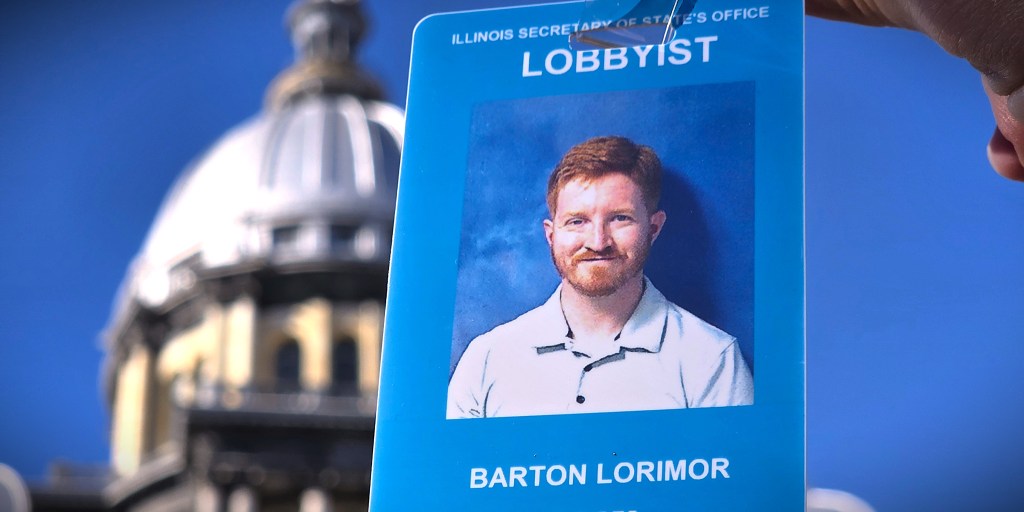
Senior executive leaders often engage state and local government officials on behalf of their organization or industry. When they do, the advance team working with them must be prepared to engage a full spectrum of interested stakeholders, including elected officials and their staff. Insights from industry executives – be they from testimony, executive correspondence, or even thought leadership media – often inspire questions and inquiries from policymakers, and it will be up to the executive’s team to respond. This is one of the many ways public relations and executive communications managers find themselves engaging in lobbying activities as defined by law.
Full Stack Strategies is pleased to have renewed Illinois state government lobbyist credentials for 2026 to fully represent clients when they interact with state and local lawmakers.
Full Stack Strategies is a cross-functional consulting practice specializing in executive communications, public policy, and corporate affairs, including change management initiatives. Clients access a full stack of integrated services that impact times of growth and crisis. Retaining lobbyist credentials in a $1.1 trillion North American economy qualifies Full Stack Strategies to represent senior executive leaders, smoothly collaborate with their in-house government relations teams, and prepare spokespeople to answer questions on-the-record.
Who Needs to Register as a Lobbyist in Illinois?
A person who is compensated to influence legislative, executive, and administrative actions taken by Illinois state government must register every year as a lobbyist. There are a few exceptions to this requirement, but those loopholes have shrank in recent years. For instance, some of the activities previously defined by law as “grassroots advocacy” are now considered “direct lobbying,” which require lobbyist registration through the Illinois Secretary of State.
These legal changes are important because they impact how corporate and service sector leaders should interact with state government officials.
Keeping policymakers regularly informed of key issues, organizational acts and doings, and public statements is vital for executive leaders to realize successful advocacy campaigns and demonstrate their respect for the role of government.
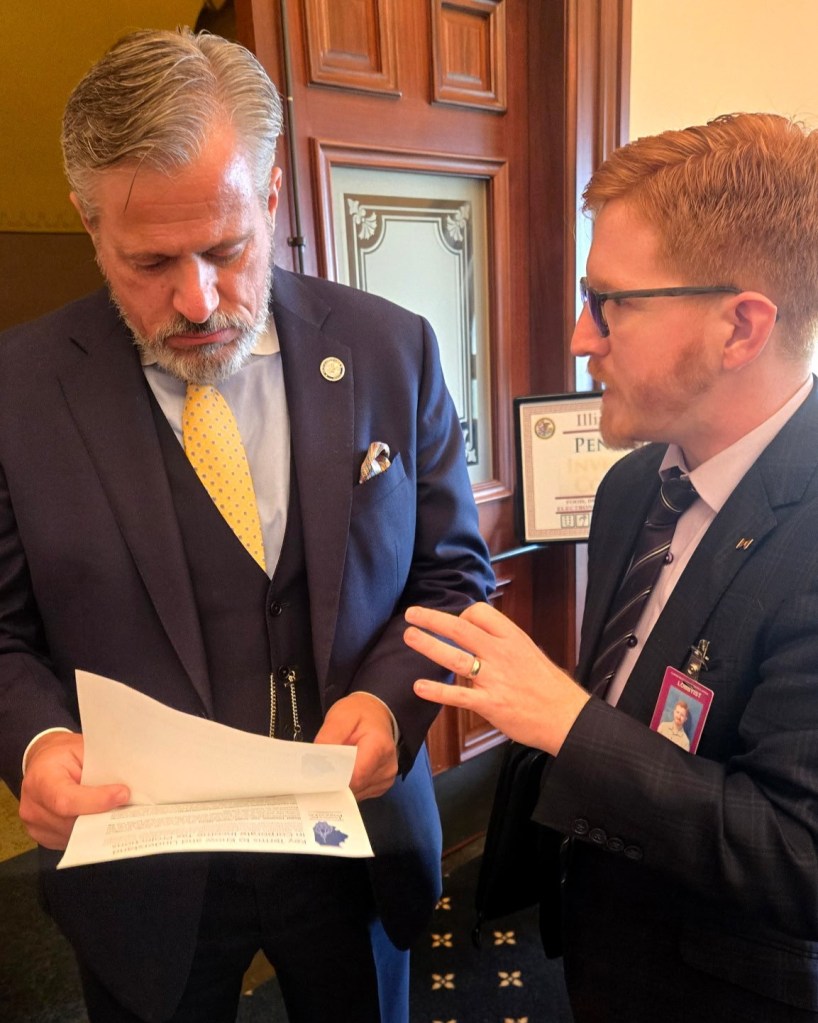
Full Stack Strategies principal Barton Lorimor visits with Illinois state Sen. Robert Martwick about recent client statements to news media ahead of committee hearings at the Illinois State Capitol.
Even without the statutory and administrative law changes, the North American Industry Classification System (NAICS) codes already consider lobbying, political consulting, and pubic relations the same professional industry. In doing so, the classification recognizes that public relations consultants, like lobbyists, manage multi-segmented campaigns that promote client interests and brand integrity. Illinois law allows public relations professionals to forego lobbyist registration in some instances, though they need to be listed on their client’s lobbyist registration as a consultant when their work involves state and local government proceedings.
Out-of-Market Lobbyists Grapple with Unusual 2026 Illinois Legislative Session Schedule
Full Stack Strategies is intentionally based in Springfield, Illinois.
The central Illinois community offers an unrivaled state government presence and hosts legislative meetings at the Capitol Complex throughout the year. Despite these strategic advantages, government relations firms have reduced, or even eliminated, their Springfield offices to redirect overhead costs to metropolitan areas with larger talent pools. However, those fiscal controls also increase the risk those organizations will miss deadlines and impromptu, in-person interactions at the Capitol.
Case and point: 2026, an election year with numerous Congressional openings, every statewide Constitutional office being up for grabs, and contests for two-thirds of the state Legislature. State Senate and Illinois House of Representatives leaders have responded by introducing spring session schedules that unusually limit the number of days both chambers are concurrently meeting. Lobby groups and interests without a regular Springfield presence are now scrambling to have in-person representation as senators and representatives alternate between being in their districts and at the Capitol for session.
Further complicating matters is the more limited availability of hotel rooms and accommodations in Springfield when the General Assembly is in town.
The COVID-19 pandemic session years showed everyone that rooms where state and local government decisions are made have yet to fully transition to virtual spaces. Having seen countless multi-billion-dollar budget bills, pension reforms, and various omnibus packages pass both legislative chambers the same day they were introduced: Trust me, you want to be in the rooms where it happens.
Why Lobbyists Need Executive Communications Managers
Having a cross-functional professional dedicated to managing a C-suite’s individual media and public affairs needs allows government relations teams to stay focused on the corporate identity and agenda. These needs regularly overlap, thereby creating numerous situations the C-suite’s media professional would need lobbying credentials, but executives typically have more rhetorical liberties than the corporate brand. For instance:
- An institution can take the position that government should make vaccinations mandatory, accessible, and covered by health insurance. A clinician or medical officer within the institution is better suited than the brand to authoritatively speak on that policy with government officials. An executive communications manager with lobbyist credentials is well-positioned to prepare and advance that spokesperson throughout those official engagements, in addition to tending to the executive’s corresponding media, investor, workforce, and community relations needs.
- Following cybersecurity incidents, lobbyists respond to legislative, political, and regulatory demands. If they are lucky, those statements will closely reflect the information other units are sharing with their audiences about the same incident. As part of these exhaustive efforts, someone from the government relations team needs to be working with key organizational leaders, such as a Chief Information Security Officer (CISO) or Director of Operations, to better inform public audiences about exactly what happened, what internal processes and operating procedures are in motion, and what actions still need to be taken. Executive communications managers help assure public statements, customer communications, and official government responses consistently and accurately reflect highly technical, heavily regulated considerations.
- Government officials often attend trade conferences, networking receptions and luncheons, and professional development seminars. In many instances, a senior executive addresses these same gatherings. When they do, and if the opportunity presents itself, there are chances for either party to address public policy considerations. Doing so without a lobbyist working the same campaign exposes the executive to deviate from agreed-to messaging or even additional regulatory issues. Having an executive communications manager actively collaborating with the legislative affairs team offsets the risk of mishaps during public engagements.
Why C-Suite Leaders Need Executive Communications Managers with Lobbying Credentials
Setting up safeguards for corporate communications and PR teams to avoid needing lobbyist credentials could be a workaround, but that is not always practical nor overly efficient.
Cross-functional liaisons extend their officers’ reach.
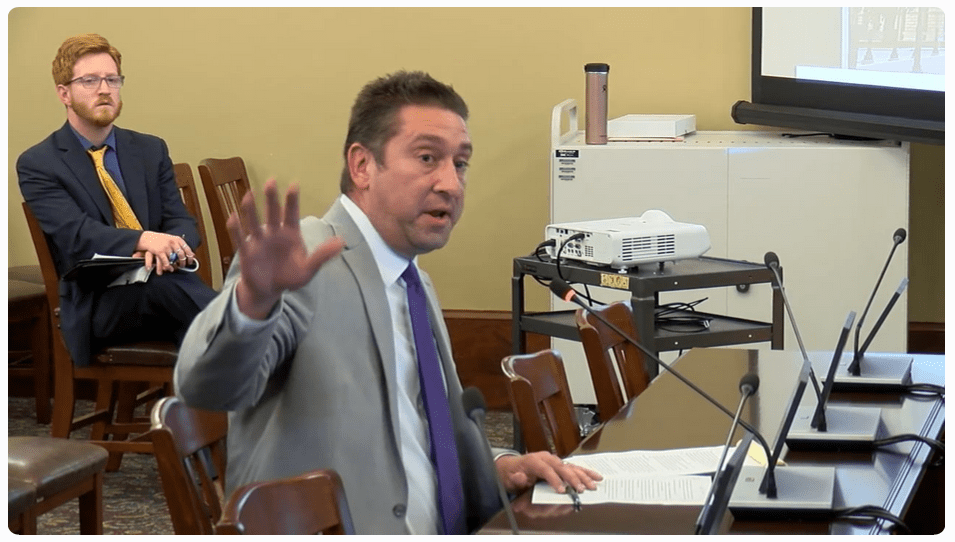
Full Stack Strategies principal Barton Lorimor advances Maurice Scholten of the Taxpayers’ Federation of Illinois during Illinois House of Representatives testimony about a legislative amendment introduced minutes before its hearing.
Lobbying can get expensive, even when the campaign does not involve political activities. The time lobbyists need to prepare for, attend, and participate in government proceedings even when a client spokesperson is not involved can quickly wreck havoc on billable hours budgets. Those costs are even higher when a client specialist or C-suite executive is on the agenda. To overcome these otherwise restrictive barriers, small and mid-sized organization executives rely on cross-functional liaisons qualified to face community, governmental, and internal stakeholders on their behalf.
Even government relations teams representing well-funded organizations appreciate reinforcements. Lobbying is a heads-up, unpredictable profession. Having a dedicated professional familiar with those needs handling media, advocacy communications, and executive interview preparations allows government relations professionals to stay focused on their own deadlines.
Speaking of lobbying time constraints, the unpredictable nature of government affairs makes it easier for advocacy teams to operate within a silo, or otherwise disconnected from the organizational structure. After all, public affairs is not a space known for an abundance of healthy work-life balances nor consideration for prior commitments. As such, lobbyists are often called away at a moment’s notice from team meetings to an unforeseen committee hearing. Such isolation is harmful to their advocacy efforts; Legislative liaisons work with greater impact when they have executive-level access to internal stakeholders with industry expertise and knowledge of internal processes drawing government interest. Executive communications managers can be bridges to those stakeholders, prepare them to work with the lobby team, and serve as a point-of-contact between organizational leadership and the government affairs professionals in the field.
Executive Communications and Change Management Strategies Must Include State and Local Government
Target Audiences, Stakeholder Identification, and Key Performance Indicators all help scope change management officers and strategic communications campaigns, but nothing will assuredly prevent narratives and materials they generate from reaching state and local government officials.
When an organization is notable within their community, their acts and doings generate local government interests. After all, their employees and customers are also government constituents, volunteers, and neighbors. The shared interest makes it better for senior executives leading continuous process improvement initiatives (workforce transitions, property management, IT project implementation, procedural changes, etc.) to be proactive with their state and local government leaders instead of responding to ill-informed inquiries.
Change is hard, and executives need a project management team they trust to address internal controls and simultaneously manage the expectations of stakeholders whose roles and responsibilities are in flux. Having a teammate just as capable of facilitating value-stream mapping sessions as they are of preparing reference manuals and press releases advise on when to interact with local authorities offsets the chance of government intervention. Identifying that point-of-contact also gives the executive a trusted source within the PMO/CMO if the initiative could benefit from public support.
 Full Stack Strategies
Leave a comment